The Cambridge sermon that shook the nation
Posted:
06 May 2026
Written by:
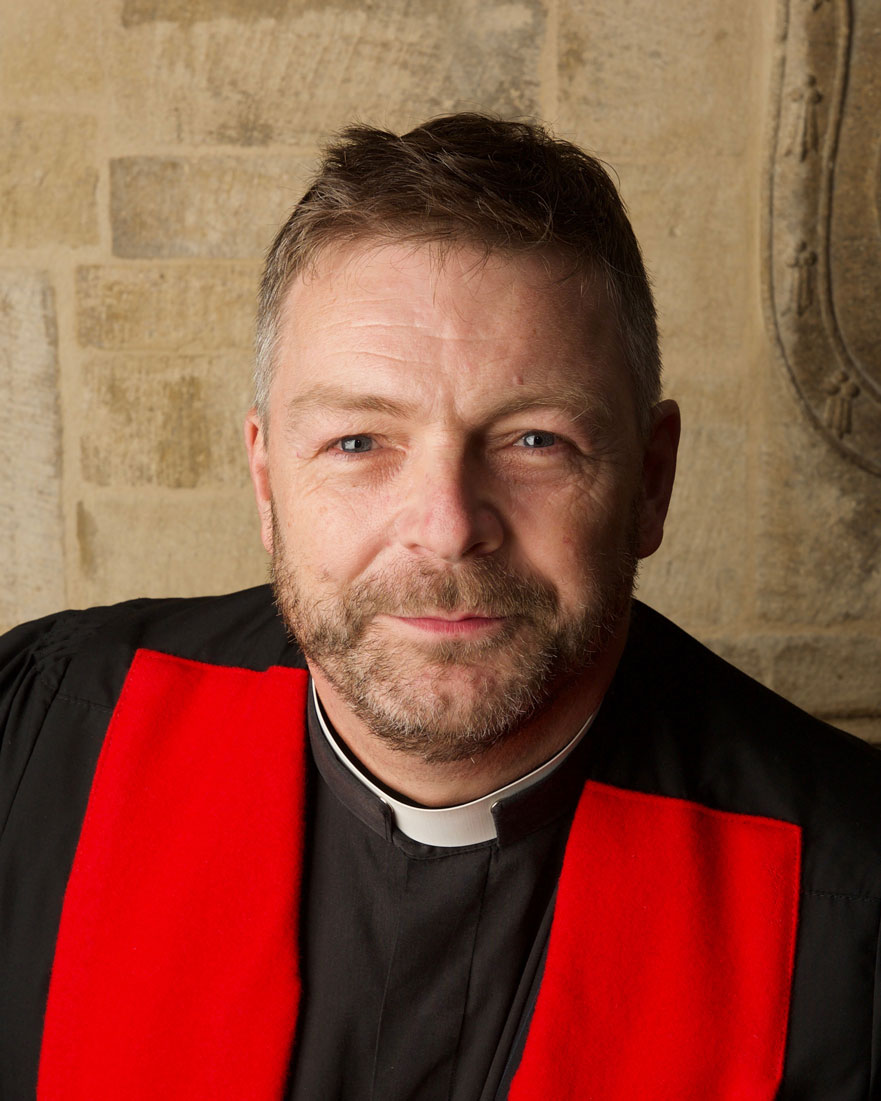
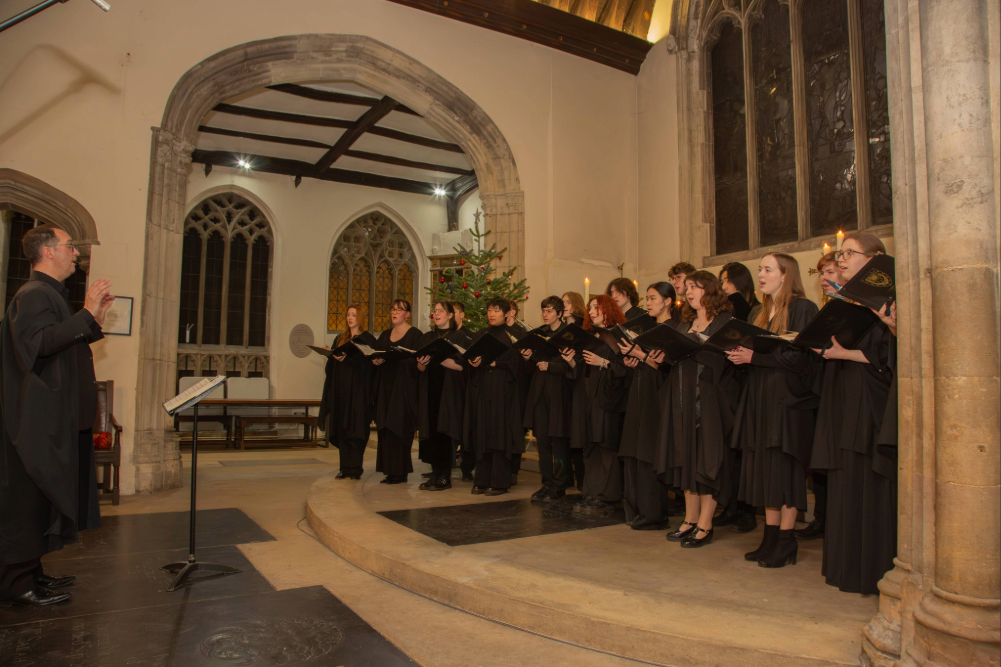
Three images showing an event inside a chapel: a choir standing beneath arched architecture, a speaker at a lectern addressing an audience, and attendees seated in wooden pews in conversation.
In 1525, Christmas Eve fell on a Sunday. At the Church of St Edward, King and Martyr at Peas Hill, Cambridge, Hugh Latimer of Clare College, who had been due to preach, swapped pulpits with Dr Robert Barnes of the Augustinian Friary.
The swap was arranged by a Fellow of Trinity Hall, Thomas Bilney, who had been pressing Barnes to make public views they had discussed privately concerning various abuses they believed were being perpetrated by senior Churchmen at the expense of the poor. The sermon that followed is credited by some as lighting the touchpaper to the Protestant Reformation in England.
The church dedicated to St Edward, King and Martyr is built on the site of a Saxon foundation, but the building that survives is the result of rebuilding undertaken around 1400. In 1446, as part of his programme to build King’s College, Henry VI demolished the Church of St John Zachary, which had been in use as a chapel by Clare Hall and Trinity Hall. As compensation, Henry gave them the church of St Edward.
In December 2025, in a weekend of events commemorating Barnes’ sermon and its consequences, Dr Alec Ryrie (1990), Professor of the History of Christianity at the University of Durham and an alumnus of Trinity Hall, set the sermon in context and explored its repercussions:
“This was not an ordinary sermon. There is no doubt that Dr Barnes was trying to start something, although I also think there is no doubt that he started more than that.”
Barnes was not the first preacher, nor indeed the first Augustinian Friar, to court controversy by articulating a robust critique of clerical abuses. In England, the followers of the late 14th-century preacher John Wycliffe, who had acquired the pejorative moniker Lollards or ‘mumblers’ had been cruelly persecuted. Several of Wycliffe’s teachings, for example on the meaning of Lord’s Supper and the importance of making the Bible available in translation, were echoed in the teaching of the outspoken Augustinian Friar and Wittenberg Professor Martin Luther. Eight years before Barnes’ sermon, Luther had published theses condemning the abuse of the practice of issuing indulgencies from penitential and purgatorial punishment by the Church for money. While Barnes’s Christmas Eve sermon did not mention Luther, he reiterated his arguments against the selling of indulgencies and blessings of churches for cash by Bishops. Such practices, Barnes argued, resembled nothing so much as the selling of sheep and cattle in the London market of Cheapside. In Barnes’ sights was one particular senior churchman, whom he was prudent enough not to name, but who was easily recognisable to his congregation. “I will never believe, nor ever can believe”, Barnes declaimed, “that one man may by the law of God be a bishop of two or three cities, nay, of a whole country”. Cardinal Woolsey, who was Bishop of Durham, Archbishop of York and Lord High Chancellor of England, could be in no doubt Barnes had him in mind. In all these abuses, it was the poor who suffered while the prelates rode their backs like donkeys.
Cambridge’s close community of scholars got wind that Barnes was likely to say something worth hearing, and among his congregation were several armed with paper, pens and ink to record what he said. Within hours, the Vice-Chancellor acted to prevent Barnes preaching a sequel the following Sunday. His caution was more than understandable. Doctor Luther’s radical preaching in Germany had unintentionally led, in the year preceding Barnes’ sermon, to the worst social unrest Europe had ever known, or would know again until the French Revolution, with the Peasants’ War resulting in the deaths of as many as 100,000 people.
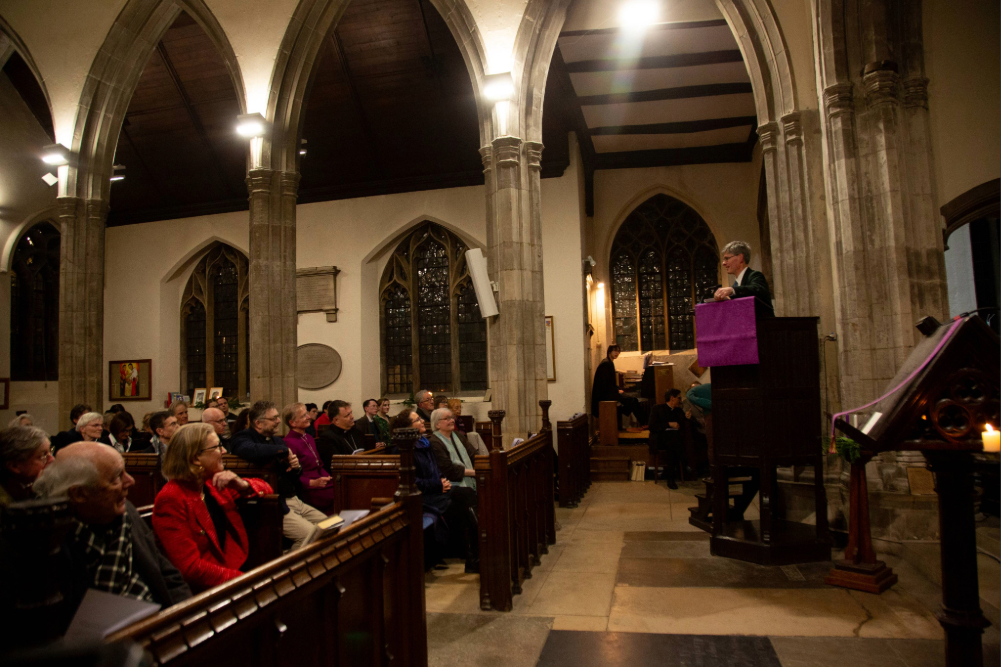
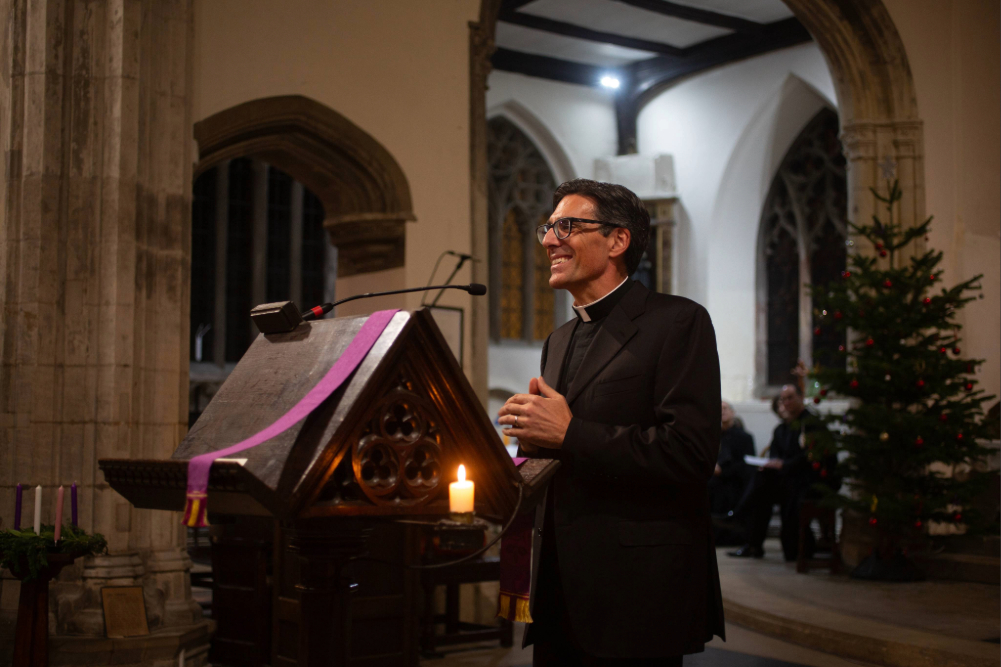
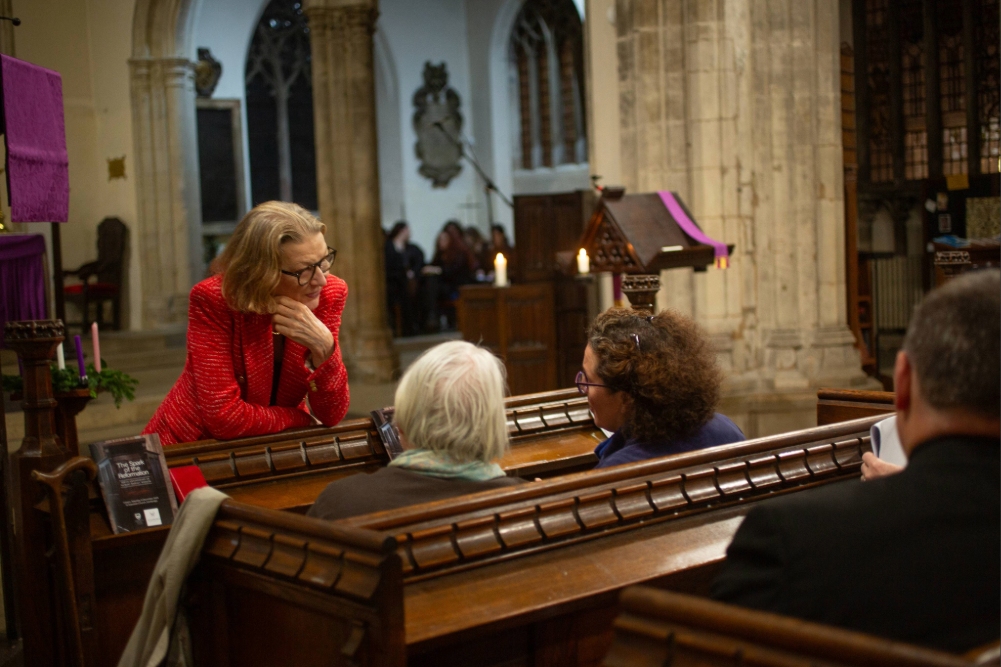
Read with calm hindsight, Professor Ryrie suggests that Barnes’ sermon was not so much Lutheran as an intensified version of views associated with the Humanist scholar Erasmus: critical of abusive Church practices certainly, but not doctrinally out of order. In the strictest sense, therefore, to characterise the sermon as the first Protestant sermon in England is misleading. Yet Barnes, who foresaw in the sermon that views such as his would lead to a new era of Christian martyrs, really did seek reformation of the Church. Moreover, his sermon unleashed revolutionary theological ideas that would ultimately prove impossible to suppress. Barnes’ Trinity Hall friend Thomas Bilney would be among the first to pay a price: he was burned at the stake in Norwich in 1531. In 1540, after delivering a sermon denouncing Bishop Stephen Gardiner, at the time Master of Trinity Hall, Barnes was tried and condemned to death. King Henry, who was even-handed in his dislike of heretics, had Barnes dragged to his execution on a hurdle strapped to a similarly condemned Catholic priest. In 1555, two more of Barnes’ Cambridge friends, Hugh Latimer and Nicholas Ridley, were executed in Oxford by Henry’s daughter, Mary. These were times when religious convictions demanded a heavy price.
Watch the 500th Anniversary of Robert Barnes' Midnight Mass on YouTube
The association between Trinity Hall and the Church of St Edward King and Martyr is overseen today by a charitable Trust established by the College two decades ago. Its
Trustees, nominated by the Governing Body and the Church’s Chapter, oversee a separate charitable fund providing for a Vicar-Chaplain and ‘the maintenance of public worship’. It
remains a link that Trinity Hall members and alumni may be grateful for.
Featured photographs taken by Natalie Sloan Photography.