From the greenhouse to the flagpole, from the organ loft to the Master’s study and the kitchens, we step inside five Trinity Hall spaces that many know of, but few get to see.
Out of sight
Posted:
08 Oct 2026
The greenhouse
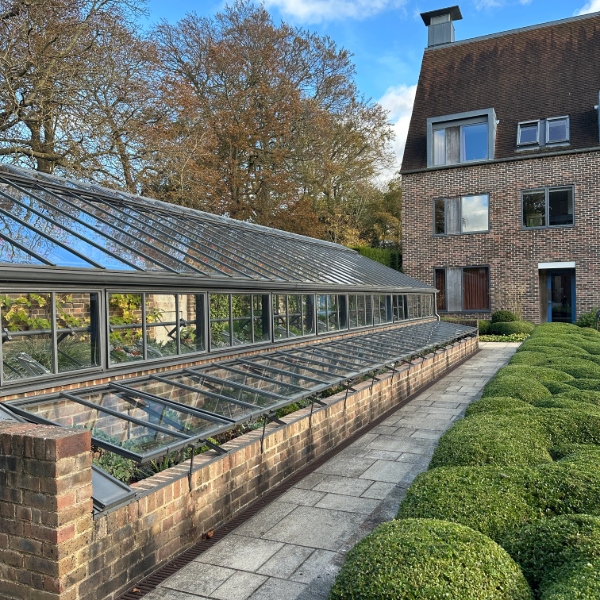
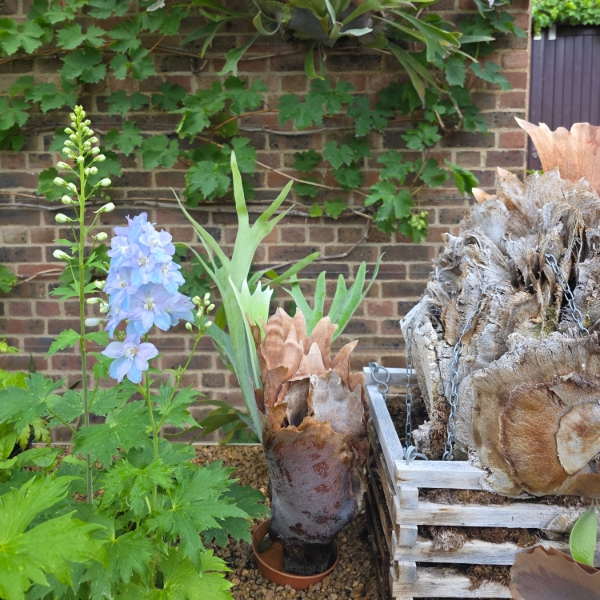
At the centre of Wychfield Site on Storey’s Way, next to the Porters’ Lodge, sits Greenhouse Court, designed to reflect the Arts and Crafts style of nearby houses. We visit the greenhouse on the sunny southeast face of the courtyard on an early summer’s day, entering through the rectangular brick doorway and ducking under the hanging grapevine to find the greenhouse caring for mainly orchids, cacti and succulents. Many of these succulents will find their way from the wooden potting bench to student rooms as part of the Pet Plant project. The greenhouse is the engine room for our swathes of beautiful, seasonal planting, providing colour for the gardens, protecting tender plants in winter and propagating new plants. It is at its fullest when the bedding plants are waiting for the last frost to pass, explains Head Gardener Sam. “I think we’re possibly the luckiest gardeners in the Cambridge colleges,” says Sam. “We’ve got everything we need to produce our plants in-house.”
“This little one is my favourite, and is kind of precious,” she says when we ask about her favourite plant. The slow-growing Platycerium Bifurcatum, or staghorn fern, is often mounted on walls in much the same way antlers might be displayed. This particular one sowed itself five years ago, growing up in the greenhouse alongside successive generations of the succulent Echeveria, perfect for table decoration. The most recent batch of 24 travelled down to Central Site the week before our visit, in preparation for the 2026 Graduands’ Dinner. We make the same journey as we duck back under the grapevine, past the lush summer flowers and out onto Storey’s Way.
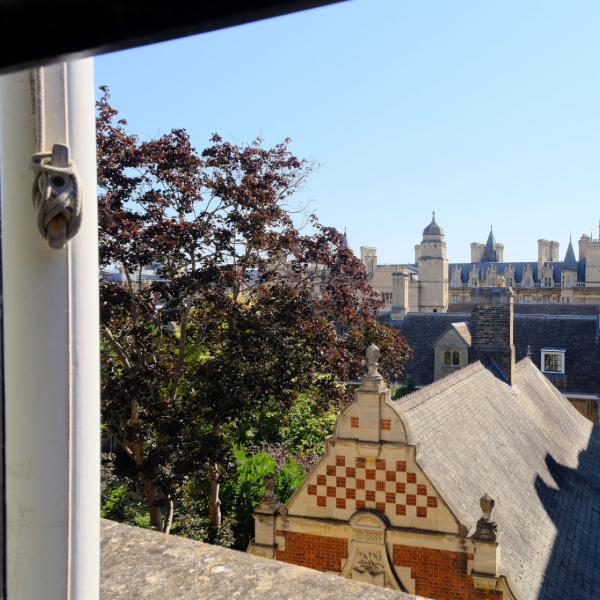
View from E staircase, next to the flagpole
The flagpole
Down at Central Site, we walk across Front Court, past the roses, jasmine and wisteria, to climb E staircase. Fifty-eight steps carved into the stone wind clockwise until we reach the top. Leaning through the east window, peering over the chest-high balustrades, we see cyclists and pedestrians jostling for position on the cobbles of Senate House Passage below. To the left, neatly wound around a large metal hook, is the thick, grey rope that connects to the flag above. The Trinity Hall flag is flown on only a few special occasions, raised each time by one of our trusted Porters. The most special of those occasions are graduation days. More than 8,500 students have lined up, posed for photos and processed to Senate House under this flag since the 1970s, when our Archive records first mention the flagpole. The view from here has changed little over the decades, and few have enjoyed it from this vantage point, save the generations of corvids that have perched on the ledge of Caius Library to our right.
The organ loft
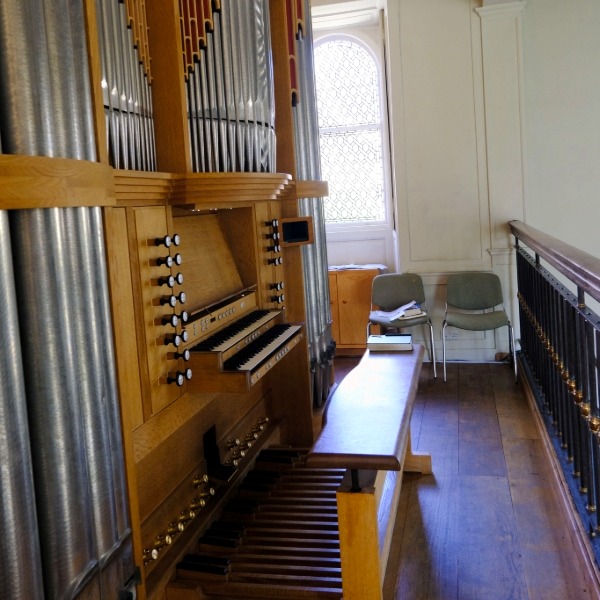
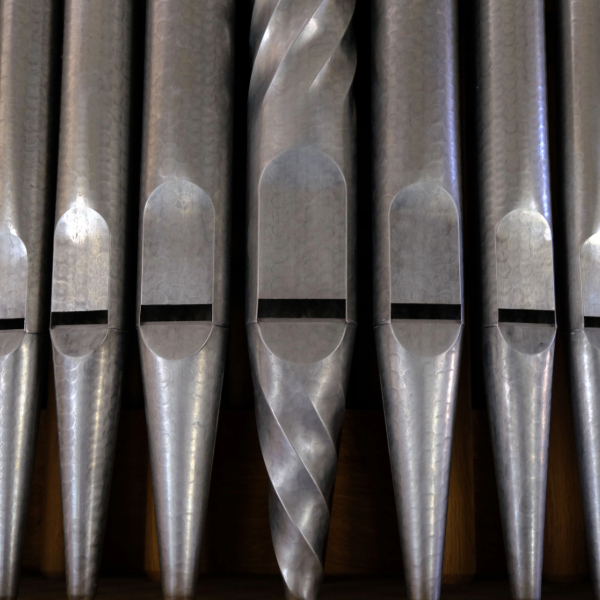
Our next stop provides another striking view from up high, but of a very different type. The temperature drops a little as we enter the organ loft, high within the Chapel, to see the organ closer than most people ever do. Installed in 2006, it was created by renowned Danish organ builder Carsten Lund and voiced for the intimate dimensions of our Chapel. From below, the organ sits behind the dark wood and metal gallery rail, its light wood case and red panels framed by ranks of silver pipes. Music appears in many places at Trinity Hall, although few are as hard to miss, or as hard to reach, as the organ. Up close as we are now, mere centimetres away, we notice things we’ve never seen before. Most of the pipes have a faint hammered texture, while a handful twist at the ends like corkscrews, the rust red panelling mirrors the red of the ceiling and, scattered around the loft, pencils, sheet music and books sit where they were last used. Staff whose offices are on I staircase are among the few lucky enough to hear the organ through the life of a recital, from first practice to final performance. This is especially memorable when Christmas songs are paired with the smell of warm mulled wine drifting up from the Buttery. As we’re leaving the organ loft, a few visitors drift into the Chapel below, stopping in the aisle to take it all in.
The Master in her study
The Master's study
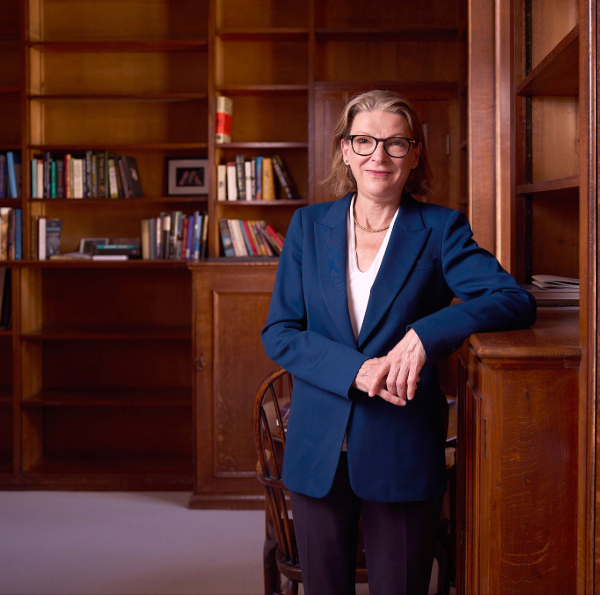
Across the landing and we enter the Master’s Assistant’s office, greeted by the ever-welcoming Heather before being shown down a short corridor to the Master’s study. Light floods through the Victorian windows overlooking the circle of grass and the Old Library across the way. The room functions both as a place for discussion, with comfortable seating arranged around the fireplace, and as a private office for the crucial work of Trinity Hall’s leader. The floor to ceiling bookshelves are stacked with fiction, literature, history and local records. In pride of place is a collection of seven books by alumni that Mary was given by a friend when she took up the role. They sit alongside a copy of C P Snow’s 1951 satirical The Masters, “which all Cambridge Masters have to read,” she says.
Around the room, Trinity Hall’s traditions sit alongside more personal choices. A College painting of the Fellows’ Garden hangs near contemporary works including a Gillian Ayres print that “just gives me joy” and a treasured Paula Rego print Mary values for its sense of struggle, perseverance and journey. There’s a pause when we ask about her favourite object in the room before we’re taken to a collection of treasured items sitting on the fireplace mantle: a photograph of much-loved grandparents, conkers collected at the start of the academic year, a blue star from the student Origami Society and an ink watercolour painting of Silly, Mary’s late cat, by Barbara, the Master’s Lodge Housekeeper.
Mary remembers sweeping past the Master’s Lodge on her way from her student room on P Staircase, never imagining she would one day work inside it.
The kitchen
Our final stop takes us to a place every alum, student, staff member and Fellow knows indirectly. Tucked away off to the side of North Court, the kitchens produce more than 66,000 meals each year through the cafeteria, Formal Hall and Fellows’ dining, before even counting the feasts, reunions and anniversary events that bring alumni back to College. Most of us, however, only ever see the finished results on our plates.
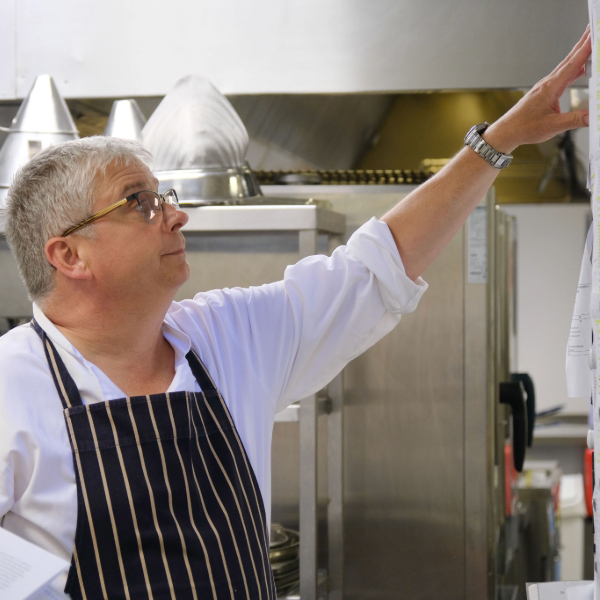
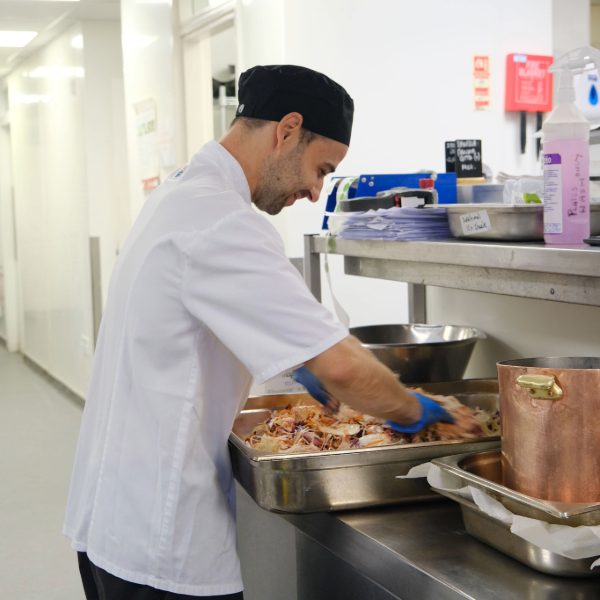
Executive Head Chef Derek meets us at the entrance and once inside we smell something sweet and rich, and hear pans clanging, the pot wash churning and sharp knives hitting chopping blocks. The kitchen has been in the same place since the 14th century and was last renovated in the 1990s. It was originally designed for silver service, not the range of catering the College provides today. The team have adapted with it, but Derek is excited about the College’s Masterplan, which proposes new and improved kitchen facilities. Our chefs are multi-skilled professionals, all willing and capable of “mucking in where needed”, as Derek puts it. Behind Junior Sous Chef Alessandro, diligently chopping vegetables for coleslaw, we find Pastry Chef Francesca and the source of the smell: a brown butter crumb in progress.
Derek is approaching 36 years at Trinity Hall and now focuses more on menu design and creation than the hands-on cooking he began with, but “I’m still as passionate about it as I was when I started at 16,” he says. In the centre of the kitchen, a wall of neatly aligned A4 sheets records event names, dates, times and food requirements, each one part of an upcoming service. As the pace in the kitchen picks up, we wave our thanks and head back into North Court, more than ready for our next cafeteria lunch.
It’s a fitting final stop, a place most of us know through what it sends out into College rather than what happens inside.