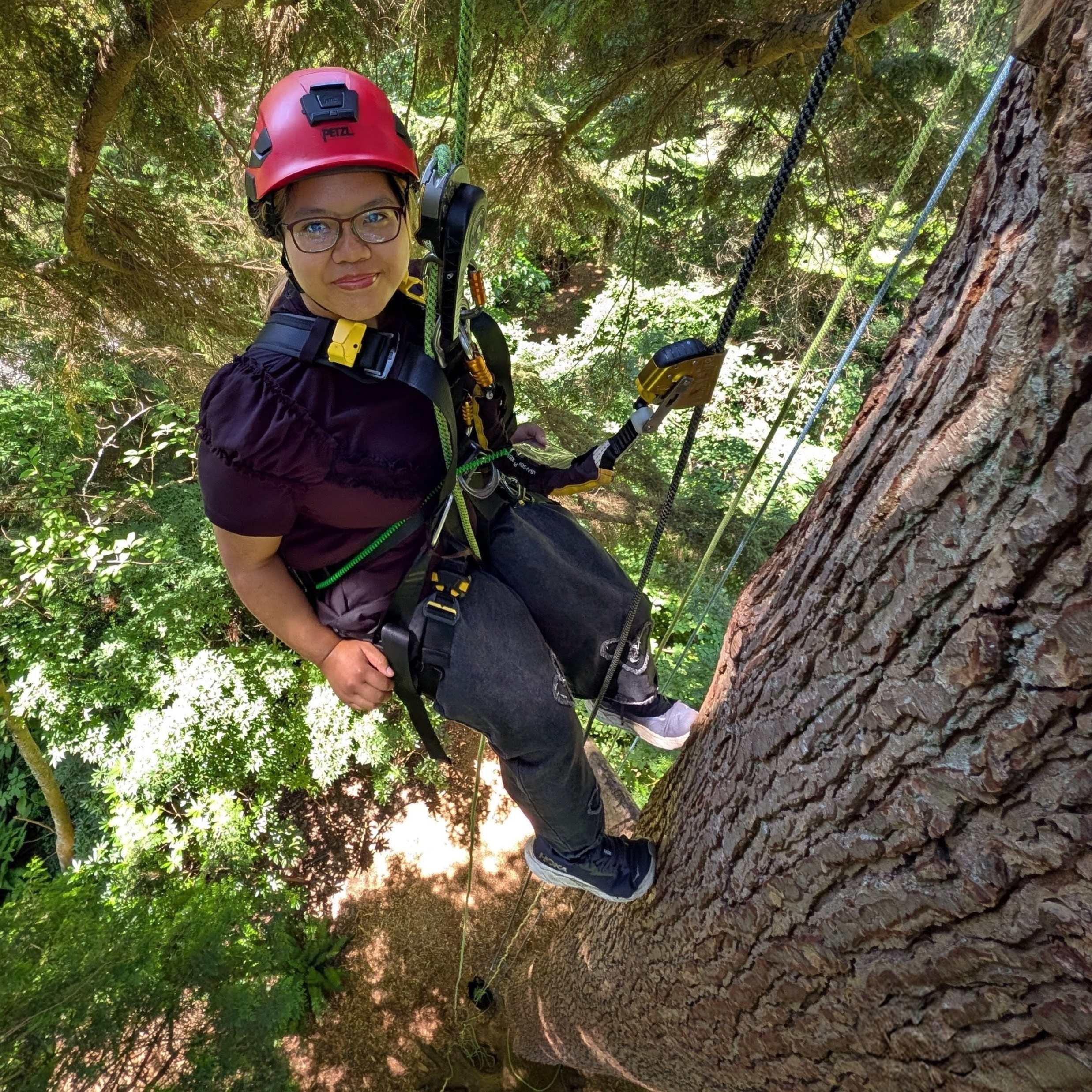
This summer, that interest took the Trinity Hall undergraduate to Vancouver, Canada, where she spent six weeks working with the Animal Behaviour and Cognition Group at the University of British Columbia. There, she contributed to research exploring how humans and urban wildlife (specifically coyotes) can coexist more sustainably.
Now studying Psychological and Behavioural Sciences at Cambridge, Amalina admits the placement pushed her well beyond her comfort zone.
“I would not generally consider myself an outdoorsy person, so this project truly pushed me beyond my usual indoor, city-bound comfort zone,” she said.
The Vancouver-based research group aims to reduce conflict between people and wildlife through evidence-based approaches that combine urban ecology and animal cognition.
One approach was the creation of wildlife corridors and protected natural spaces within urban environments. Providing access to food sources and safe routes through cities reduces the likelihood of animals entering residential areas and coming into conflict with people.
Comparing this approach to the treatment of monkeys she encountered growing up, Amalina said she was struck the contrasting results.
“I found it deeply fascinating how solutions which stemmed from understanding animal behaviour and a respect for nature allowed for better solutions that both improved the lives of wildlife and humans.”
Her project work focused on fear responses in coyotes and other urban carnivores. Using motion-activated cameras and speakers, researchers played different sounds, including human voices and predator calls, to examine how animals reacted. The findings could help inform non-lethal deterrent strategies.
Alongside fieldwork in forests, parks and urban green spaces, Amalina worked on coding and equipment development, helped prepare data for machine-learning systems used to detect disease in wildlife, and supported public engagement initiatives designed to encourage community involvement in conservation research.
The experience reflects the breadth of opportunities available to Trinity Hall students, through programmes such as the Laidlaw Scholars initiative which Amalina’s work was part of.