Holbein’s Wit: Pictorial Ingenuity in Renaissance Art (Renovatio Artium, 17): by Professor Alexander Marr
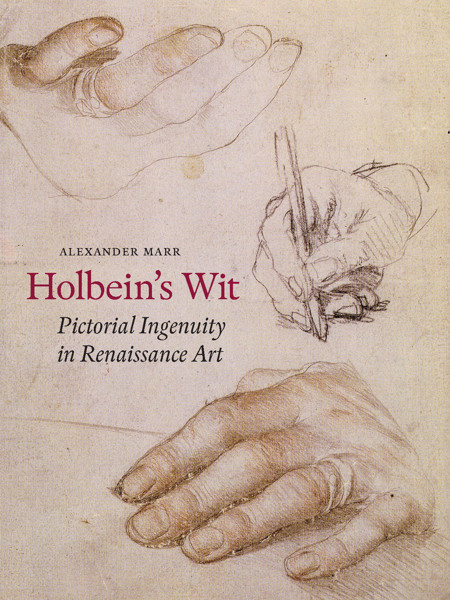
Hans Holbein the Younger (1497/8–1543) is renowned as an outstandingly realistic painter―the acme of Renaissance naturalism. In fact, he was a purveyor of cunning ambiguity. Holbein’s Wit: Pictorial Ingenuity in Renaissance Art reveals the artist at play, juggling the uncertainties and paradoxes that arise in the enterprise of imitation. Spanning Holbein’s career in Basel and London, and encompassing his portraits, devotional paintings, and designs for prints and the decorative arts, the book explores this celebrated artist’s subtle pictorial wiles. Holbein was immersed in the multi-faceted world of Renaissance ingenium or ‘wit’, which could mean innate talent, mental acuity, generative capacity, and a person’s unique nature. In dialogue with witty patrons such as Desiderius Erasmus and Thomas More, Holbein advanced an ingenious kind of artmaking characterised by visual jokes, puns, and internal contradictions. Responding to humanism’s literary conceits with an inventive visual language, he upended conventional assumptions about naturalism and the status of painting to assert the worth of an autonomous artistic intelligence.