The History of Women
1869
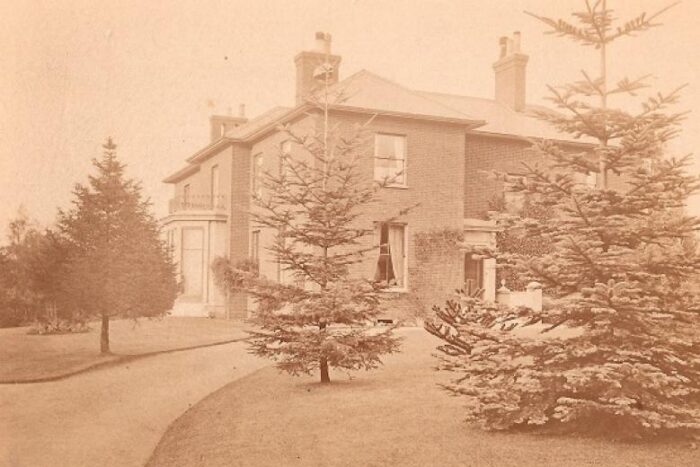
The College for Women was established at Benslow House
On 16 October 1869, the ‘College for Women’ opened at Benslow House in Hitchin, 30 miles south of Cambridge. With growing demand, the College then secured a site in Girton village, beginning the founding of the college we now know as Girton College.
1870
‘Lectures for Ladies’ began
In 1870, ‘Lectures for Ladies’ began in Cambridge. Due to the location, many women were unable to attend so, urged on by Millicent Garrett Fawcett who would later play a predominant role in women’s suffrage movement, philosopher Henry Sidgwick founded a house in which young women attending the lectures could reside.
This would become the beginnings of Newnham College (the Old Hall to be exact!).
1881
Women became eligible to take the Tripos examinations
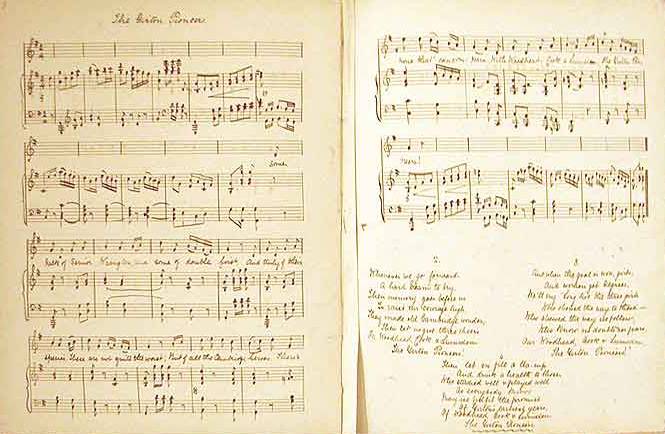
Whilst the first women (Sarah Woodhead, Louisa Lumsden and Rachel Cook) had ‘unofficially’ taken the Tripos examinations in 1873, it wasn’t until 1881, when the University of Cambridge passed three resolutions, that women would be eligible to take the examinations alongside their male counterparts. In doing so, they would receive a certificate, but were not yet permitted to obtain a degree title like other male students.
In 1887, Agnata Frances Ramsay of Girton College garnered national attention after coming top of the Classics Tripos, obtaining a First with the highest scoring man placed in the second division.
In 1890, Philippa Fawcett of Newnham College (daughter of Henry Fawcett, Fellow of Trinity Hall from 1856) was classed as the Senior Wrangler (top scorer) in the Mathematical Tripos. In the very same year, Margaret Alford, became the Senior Classic (top scorer in Classical Tripos).
1885
The Cambridge Training College for Women Teachers was founded
The Cambridge Training College for Women Teachers was established in 1885, being the third College to provide women’s education at Cambridge. This would be the founding of the institution now known as Hughes Hall.
1897
Cambridge University votes on whether women should be granted degrees
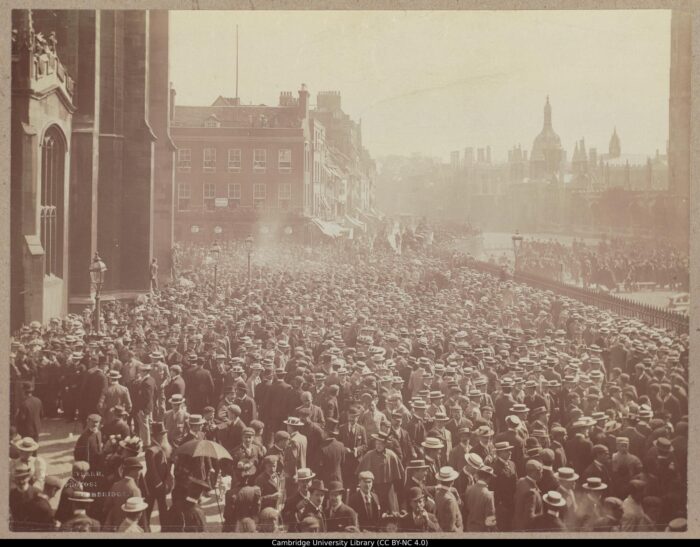
Whilst the debate of granting women degrees would be voted on many times across the University’s history, the vote on 21 May 1897 would go down in history.
On this day, crowds of male students protested outside Senate House against the vote to grant women degrees, setting off rockets and burning an effigy of a women cycling in Market Square. The vote was ultimately defeated, with 1,707 voting against granting women degrees, with 661 in favour.
The Silver Crescent, a student magazine at Trinity Hall, distributed around the time of the poll, would later show that one of the effigies hung on Women’s Degree Polling Day was designed by two Trinity Hall students.
1921
Women were granted the titles of degrees
Women were finally granted the right to the title of degrees in 1921, a year after Oxford University. However, they were still barred from membership of the University. Gradually rules about chaperones were relaxed and female students and lecturers were able to use the University Library and borrow books in their own right, just like their male counterparts.
The University restricted female students to no more than 1/5th the number of men, although in reality it was much less than this. The first female professor was elected in 1939, Dorothy Garrod, who took up the Disney Professorship of Archaeology.
1948
Women were granted formal membership of the University
Women were finally granted full membership of the University on 6 December 1947, but weren’t admitted to the Union Society until Michaelmas 1963. With full membership, women were permitted to graduate in the same way as men. The first honorary degree given to a woman was conferred upon the late Queen Elizabeth, the Queen Mother.
It was not until 1960 that the regulations restricting the numbers of women admitted were rescinded and, in 1965, the University amended its statutes to allow colleges to amend their own statutes in order to admit women.
1954-1976
More Colleges began to admit women
Following the introduction of women to the University’s studentship, New Hall (also known now as Murray Edwards) was founded in 1954 and Lucy Cavendish College was founded in 1965, both exclusively for educating women students. 1965 and 1966 also saw the foundation of three new graduate colleges admitting both men and women; Darwin, Wolfson, and Clare Hall.
In February 1967, two years after the University statutes were amended, a vote by the Trinity Hall Governing Body approved by a slim 2/3rds majority the removal of the definition of a ‘person’ as being a male person from the statutes. This subtle change meant that there were no longer any legal impediments preventing the College from admitting women.
King’s, Churchill, and Clare were the first three all-male colleges to admit women in 1972, followed by Sidney Sussex and Selwyn in 1976.
1976
Trinity Hall admits women to the College
Whilst Trinity Hall revisited its statutes in 1974, the College did not welcome female students until two years later.
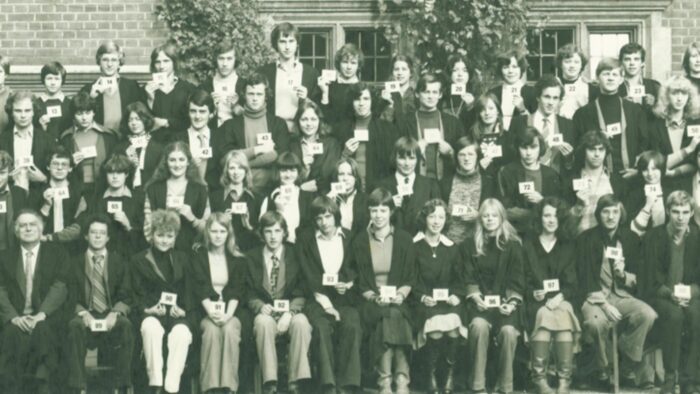
Trinity Hall was the sixth college within the University of Cambridge to admit female members, welcoming female Fellows and graduate students in October 1976 and female undergraduates in October 1977. Dr Sandra Raban (Medieval History) and Dr Kareen Thorne (Biochemistry) arrived at Trinity Hall in January 1976 as the College’s first female Staff Fellows.
Dr Anne Simon (1976) was the first female student at Trinity Hall, arriving from Newnham College to study for a PhD in physics.
1977-2000
Life at College thrives
First-hand accounts suggest the transition to a co-education institution went rather smoothly, and that they were met with little opposition. Women constituted approximately 1/3rd of the undergraduate intake in 1977 and were actively involved in College life, joining clubs and societies and being elected to prominent roles on the MCR and JCR committees from the outset.
Academically the College flourished, climbing to the top of the Tripos league table for the first time ever in the 1980s. The 1978 edition of the College newsletter remarked that female students had won half of the College’s 52 awards. Dr Kareen Thorne went on to become the first female Senior Tutor in 1985, and Dr Sandra Raban became the first Admissions Tutor in 1986. Another Fellow, Joanna Womack, became the first female Bursar in 1990. Trinity Hall also became the first College in Cambridge to appoint a female Butler, with Sara Rhodes taking up the position in 1997. She retired in 2023 after a remarkable 26 years of service.
The women thrived athletically as well, with several attaining Blues. In 1982, the Boat Club went head of the river for the first time since 1948, and the Ladies IV boat went head of the river in the 1983 Lents. In October 1986, the Penguins were formed ‘to promote and gain recognition for ladies sport in the College.’ These achievements proved the detractors wrong. The fears that the College would suffer academically and athletically if women were admitted were completely unfounded.
2000-2026
Trinity Hall in the 21st Century
Now in the 21st century, many could not imagine Trinity Hall as an institution that was ever without women. On 1 October 2022 our current Master, Mary Hockaday, became the first woman to hold the post, following a distinguished career in broadcast journalism.
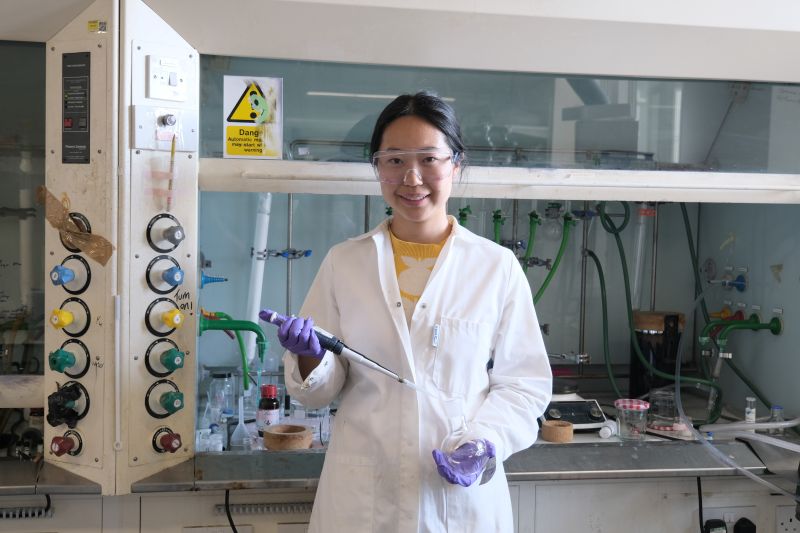
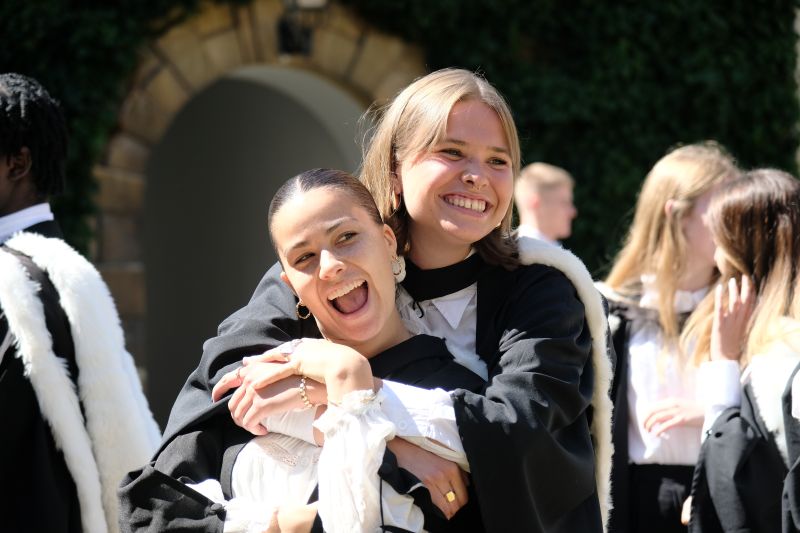
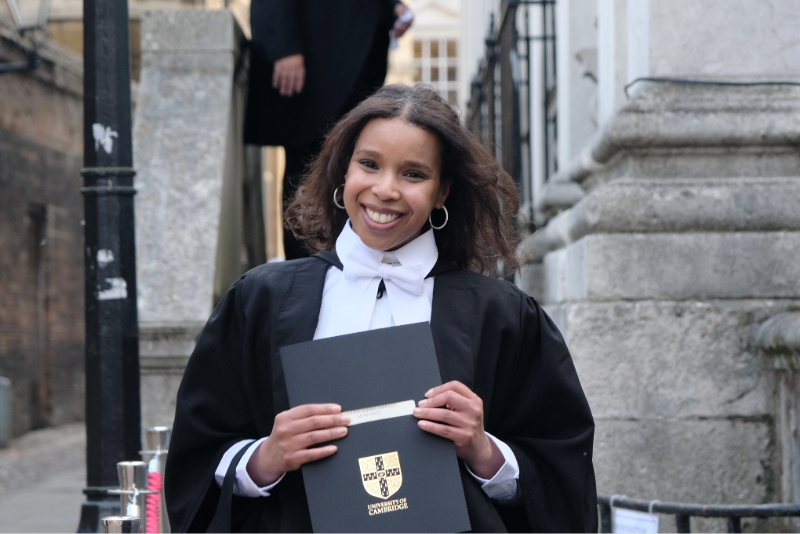
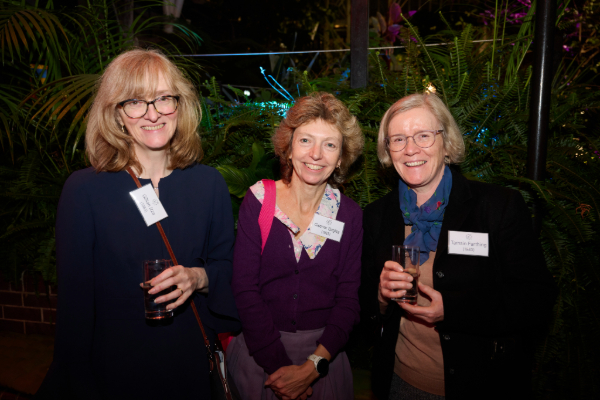
Today, our female and non-binary students, alumni, Fellows and staff continue the story of women at Trinity Hall.