Student Profiles – Harshvir, Medicine
Harshvir is a sixth-year clinical Medicine student from London. At A Level, he studied Biology, Chemistry, and Maths.
Why did you choose Trinity Hall?
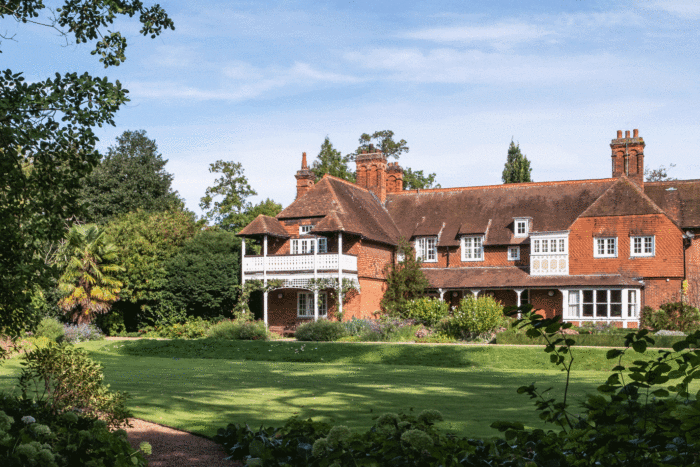
I chose Trinity Hall because of its small, close-knit community and its central location in Cambridge. These were the two most important factors for me, as I wanted somewhere that made it easy to settle into Cambridge while also helping me quickly feel part of college life.
How did you prepare for the application process and interviews? Was it what you expected?
The application process was similar to other medical schools, involving a personal statement and an entrance exam. At the time it was the BMAT, but it is now the UCAT.
The interviews, however, felt quite different from other universities. They were more conversational and often built around your own experiences, with questions designed to stretch your thinking beyond A-level content. I expected them to be challenging, which felt familiar, but I was struck by how friendly and supportive the interviewers were. That same atmosphere continues in supervisions with Fellows [the academics who teach you], making the transition to Cambridge feel natural.
Why did you choose your course?
I chose Medicine because of its balance between scientific learning and clinical practice. The early years are more theory-driven, whereas the Clinical School is more practical and closely aligned with day-to-day medical practice as a doctor. On clinical placements, I most enjoy engaging with patients, understanding them as individuals and hearing their life stories beyond just their diagnosis.
How are you taught?
On weekdays, I am typically on clinical placement from 9am to 4pm, along with a weekly 1-hour clinical supervision. The supervisions usually involve reviewing a patient with a specific clinical finding and discussing how we would assess and manage them as a doctor, simulating real clinical decision-making. This effectively bridges theoretical learning with clinical practice. Placements are based at Addenbrooke’s Hospital or at regional hospitals across the East of England.
Alongside this, I dedicate around 8 hours per week to independent study, which includes reviewing medical conditions and reflecting on patient encounters from the week.
I organise my schedule using a Google Calendar timetable, which helps me stay structured and manage my workload effectively. It also ensures I maintain a healthy balance outside of Medicine, allowing time to relax and enjoy college life, including spending time with friends, attending formals, and taking part in May Week celebrations during the Easter term.
What other things do you spend time doing?
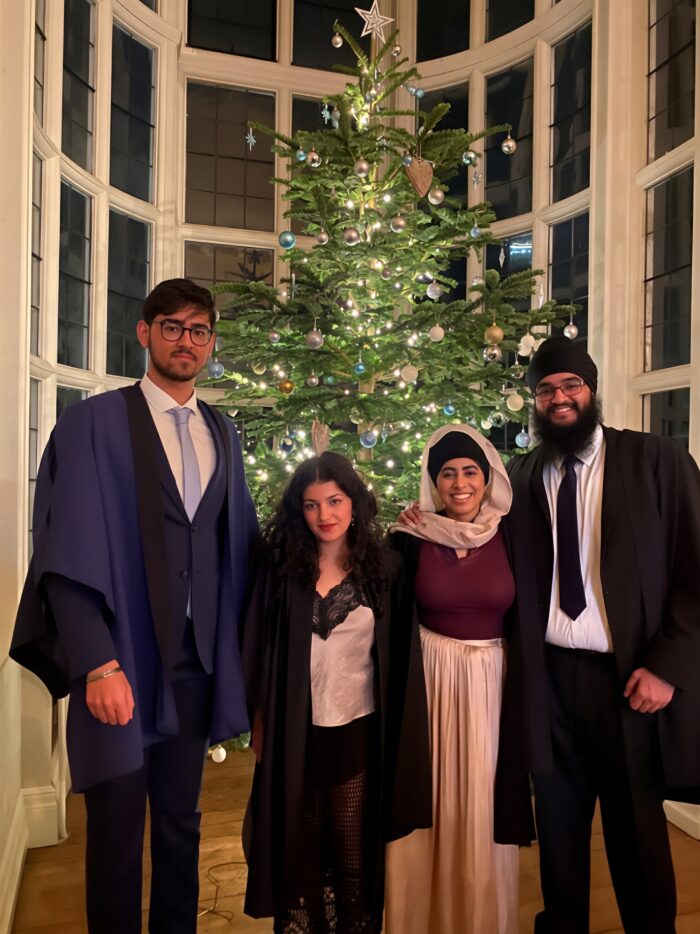
Medicine at Trinity Hall has some great social perks. Every year our amazing Director of Studies (DoS), Professor John Bradley, organises a party for all the medical student and teaching fellows at the college. It is always a good break from clinical work!
Outside of college, I am actively involved with the Cambridge University Sikh Society, attending weekly prayers and cultural events throughout the year. There is a really nice sense of community, and while there is no pressure to only stay within college, Trinity Hall also provides a multi-faith prayer room on Central Site that we can use when needed.
Being a medical student also means getting involved in different medical societies. I was previously Publicity Officer for the Cambridge University Trauma & Orthopaedic Society (CUTOS). We organised a range of events throughout the year, with the highlight being the annual CUTOS conference, which brought together students from across the UK alongside industry sponsors for lectures and workshops.
If you still have questions about studying at Trinity Hall, please go to the Access and Outreach page, to see the current support schemes we are offering prospective applicants and to contact the Access and Recruitment Officer.