Linguistics & Modern Languages
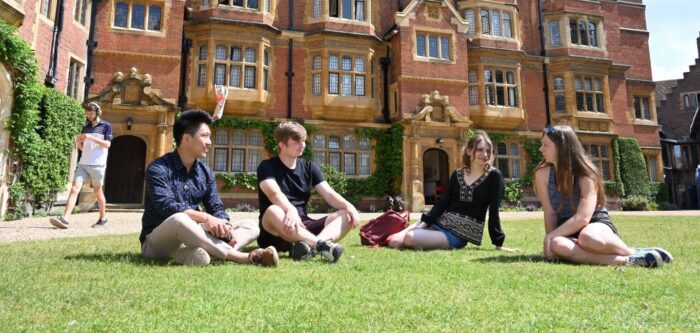
On this course, you will learn about the language, culture and history of most European, and many non-European, countries. You’ll study one modern language in depth. Alongside this, you will also explore how the scientific study of language can help us understand the human mind and creativity.
The range of topics available to study across linguistics and modern languages means you can develop your own curiosity about how these areas intersect.
- UCAS Code: Q1R8
- Campus Code: 4
- Duration: 4 years
- Places per year: 1-2
Entry requirements
Minimum offer level
A-Level: A*AA
IB Diploma: 42 points, with 776 at Higher Level
Please also read our Entry Requirements page.
Subject requirements
We don’t ask for any specific subjects to apply to Linguistics and Modern Languages, if you want to study a modern language from scratch. You can study all languages options from scratch, except French.
If you choose French as your language option, you must have:
- A Level/IB Higher Level French
We also recommend any of these subjects for a strong application:
- Languages
- English (language or literature)
- History
- Mathematics

Why Trinity Hall?
At Trinity Hall, you’ll join a long and distinguished tradition in Linguistics. The College was led for many years by Sir John Lyons, one of the most influential linguists of the 20th century, and that legacy continues in the academic support you’ll receive today.
You’ll be guided by an internal Director of Studies in each of Linguistics and Modern Languages who will work closely with you throughout the course, helping you navigate your options and build confidence in your approach to the subject. Fellows teach across multiple languages and a wide range of specialisms, offering focused guidance tailored to your chosen combination and interests.
You’ll be part of a lively community of language students, including undergraduates and postgraduates, with regular opportunities to exchange ideas with those studying related subjects. This creates an environment where languages are explored in a wider intellectual context, shaped by different approaches and perspectives.
Linguistics and Modern Languages at Cambridge
Admissions process
Written work
Two recent examples of essays you have written at school. If you are applying for a language that you have already studied at A Level or equivalent, then one of the essays must be in that language.
Admissions assessment
If shortlisted for interview, you will be asked to take an admissions assessment. If you are applying to study a language that you’ve studied at A Level, you will take both the Linguistics assessment and the MML assessment. If you are applying to study a language from scratch, you will only take the Linguistics assessment. The College will register you for this – you do not need to register yourself.
See also the University website’s page on College Admission Assessments.
Interviews
Two interviews of around 25 minutes each.