From the moment I arrived, I realised I had chosen the right college and that my reason, the informal explosion of flowers outside the Old Library, had found me a college of just that character. The contrast with the rather sterile rows of lavender at Clare was no accident.
The first women
Posted:
06 May 2026
Written by:
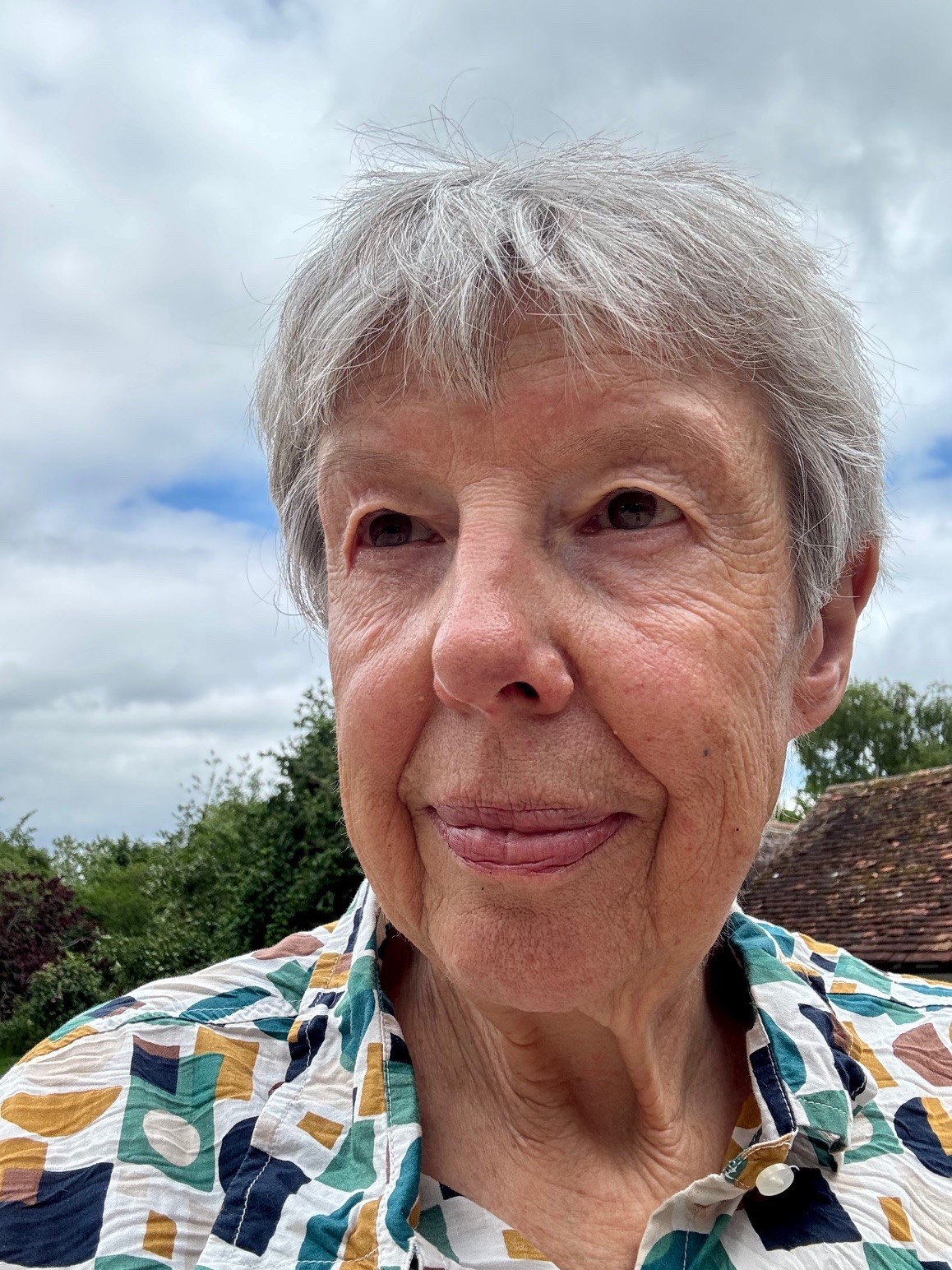
Two women dressed in long Elizabethan dresses, performing as part of a play.
It was a great time to be growing up at university because feminism was in the ascendancy and I felt empowered as a ‘first woman’ (I don’t recall ever being called ‘girl’, which I was not) who had been made so welcome to fight fellow students with the wise old College on my side. It is incredible to me now that so relatively recently fellow students saw the futures of their female contemporaries as being lesser, but they did, and we enjoyed loud discussions about a woman’s place late into the night. This culminated in a series of feminist plays in collaboration with Trinity Hall’s Preston Society, which I acted in and then directed: Brute Farce and the Mummy’s Curse (about Dracula and menstruation!) amongst them.
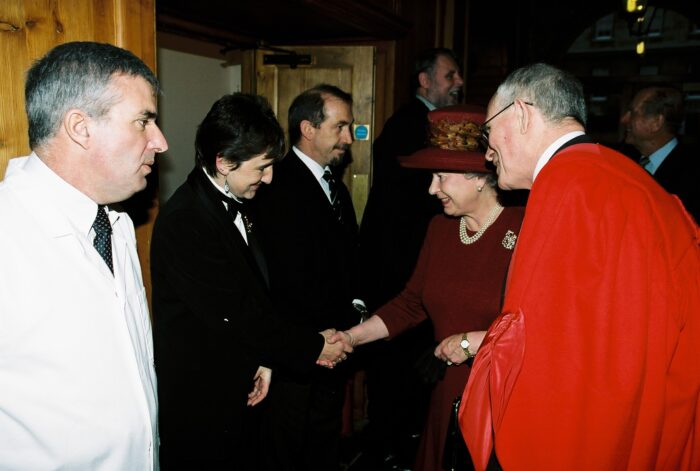
It is also remarkable, thinking back, that I never picked up the slightest hint of sexism from the College staff. Traditional as they were, Ken Golding the Head Porter, rosy faced and jovial, Ron [Chapman] who had been a typist at the Nuremberg trials and who we loved, welcomed us all and chuckled at our requests and eccentricities without fear or favour. They and our lovely bedders were our extended family and they made us feel safe and special.
The sense of community was, however, far more powerful than any faction.
Whilst we did have to climb a slippery wall by the bike shed to get back in after the College had locked its doors at night, it didn’t have to happen very often because there was plenty going on inside. I loved all the different things I did – tea parties with tens of friends squashed into my tiny room drinking horrible, powdered coffee (which my mother had stock-piled due to the world coffee shortage), cooking mung bean curry on a gas ring, posing around at the Asparagus Club, rowing – and above all drama. And the Trinity Hall community was wonderful at lending a hand. We all assumed we could manage our academic work and row or learn lines or, if an engineer, construct a safe, many-tiered auditorium. And we did. The downside is that I have often been disappointed when people I have met since do not understand that community is important, or do not have the energy for it.
I’m afraid that in the face of the exciting contemporary world I gave up on history and changed to law as a more likely instrument for changing the world. I was not influenced by the Trinity Hall legal tradition, at least I do not think I was, because I saw that as way too conventional, but I was very excited to discover from a Trinity Hall PhD student that law was a tool which could be used to challenge the maladministration of the executive.
Although I do, and always will, suffer from ‘impostor syndrome’, Trinity Hall was a gentle place which taught me that it was safe to have a go at sticking your neck out. I remember Jonathan Steinberg saying that the motto of the Trinity Hall Music Society was ‘Oh well…’ Difficult pieces were performed with confident enthusiasm and quite a few mistakes, a way of living which worked for me. So I left Trinity Hall with a great desire to embrace life and give it a go and no one has sniped at me, then or now, when I get it wrong.
I made my way through the legal world as a solicitor and, rare at the time, became a female equity partner (albeit in a small, alternative firm) thus keeping up my role as a ‘first woman’. I then became an Employment Judge and as one of the early group of out gay judges have been able to make a difference in a small way to how the judiciary runs and is perceived. I have also worked for a charity and spent years as a volunteer running Crisis’s Open Christmas for homeless people with various Trinity Hall friends joining me along the way.
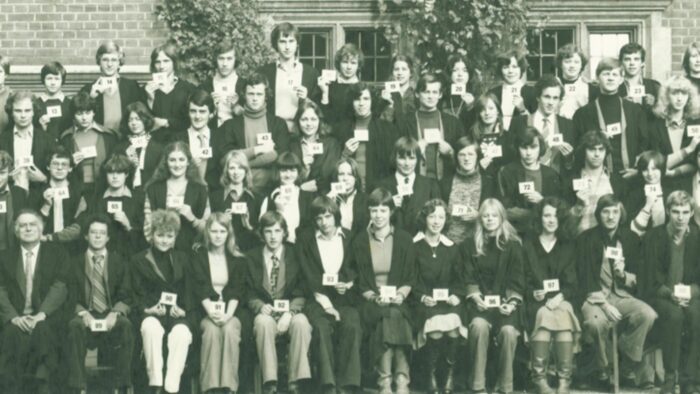
I am very proud of what we women did 40 years ago. What we did was blaze a trail – but above all what the Fellows and staff of Trinity Hall did in welcoming us so well was mark out the route for us, and a very fine route it was.
This is an excerpt from The First Women book, produced in 2016 to mark the 40th anniversary of women at Trinity Hall. The book was edited by Dr Sandra Raban, one of the first two female Fellows to join Trinity Hall. The 50th anniversary of women at Trinity Hall begins in October 2026.