Understanding Earth’s biggest mass extinctions
Posted:
21 Apr 2026
Professor John Marshall standing on Ella Island in Eastern Greenland.
My professional life as a geologist has taken me to places most people never visit.
To the back of beyond rather than the tourist trail. Much of that journey, geographically and intellectually, has been shaped by Trinity Hall and fieldwork conducted in some of the most remote parts of the world, particularly the Arctic. I have spent nearly a year of my life in Greenland summers, taken part in 19 expeditions to Greenland and Spitsbergen, and worked by boat, on foot, and more recently by light aircraft and helicopter. It was for this work that I was awarded the Polar Medal in the most recent New Year Honours list.
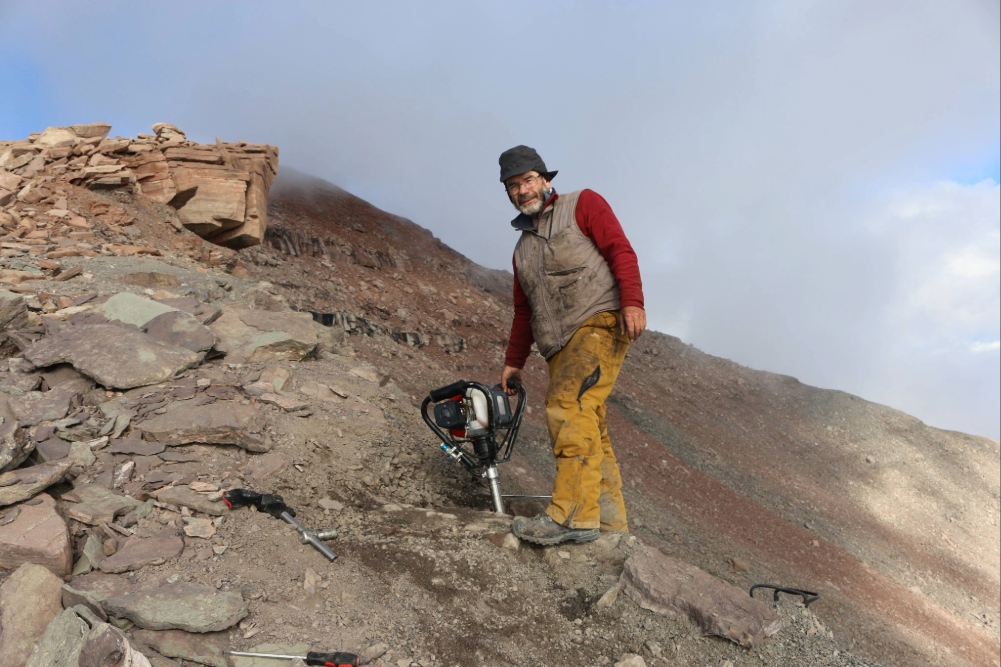
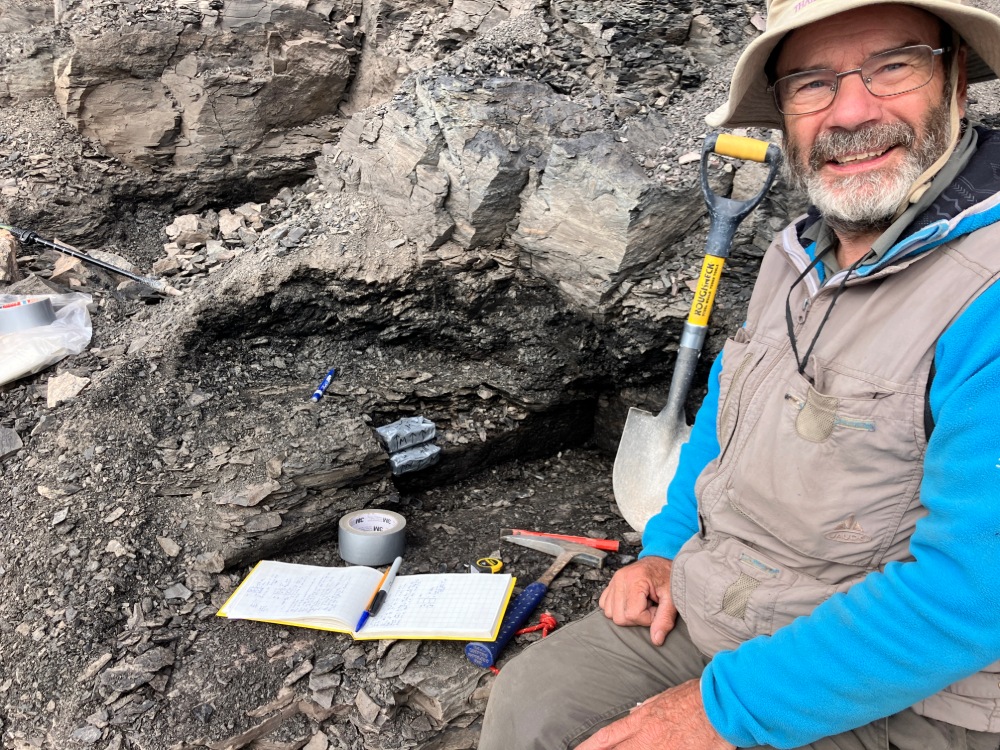
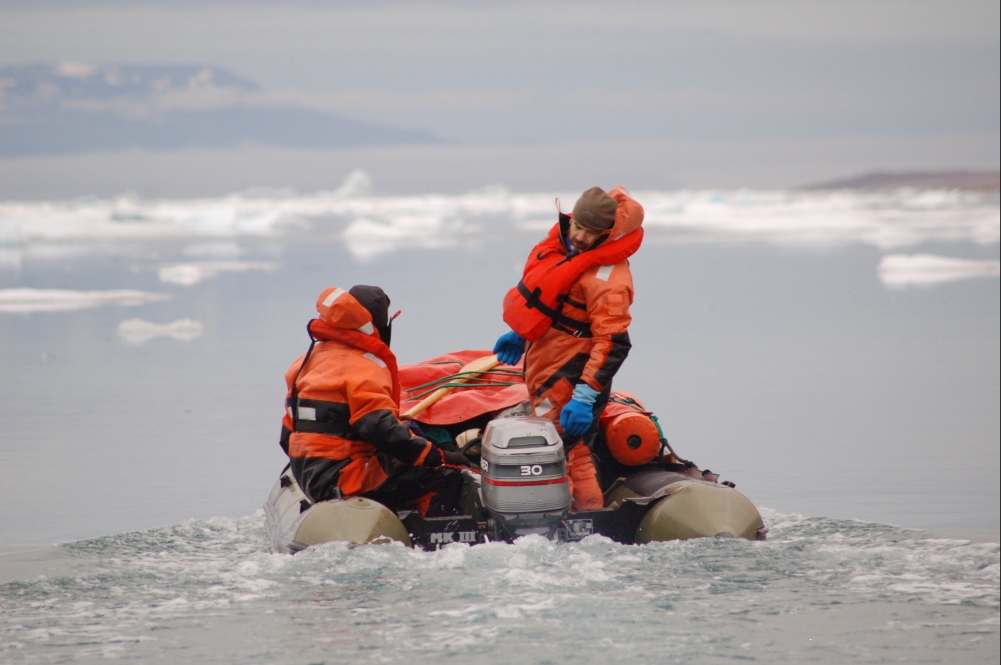
My research career has focused on reconstructing ancient terrestrial environments, particularly during critical moments in Earth’s history when life and climate were under extreme stress. One of the most significant findings of my career came from work on the End Devonian mass extinction 355 million years ago. For years, we searched Greenland’s rock record for a continuous section through this extinction, working from the edges of a vast ancient lake formed during the exceptionally warm conditions of a super-monsoon. Earlier expeditions by boat were limited by how far we could walk. Eventually, I took a chance and used a helicopter to drop us further inland.
That decision paid off, and we located the extinction level. The real surprise lay not in the rocks themselves but in the fossil pollen they contained. The pollen grains were malformed with darkly pigmented walls, providing clear evidence of damage by ultraviolet radiation. The terrestrial vegetation had been exposed to increased UV following a collapse of the ozone layer. This ancient warming event had triggered a cascade of environmental effects, from extreme climate to atmospheric breakdown. The uncomfortable implication for us today is that global warming will cause the same process to happen again, and we will be dealing with a thinning ozone layer as well as rising sea levels and exceptional weather events.
Beyond the Arctic, my work has taken me to Scotland, Russia, China, Bolivia, and the Falkland Islands. As an academic, one becomes an expert in a narrow field. In geology, there are not many of us, which has given me opportunities to collaborate widely and apply my expertise across vastly different geological problems.
Before academia settled me at the University of Southampton, where I have remained ever since, my career path took a few sharp turns. After completing my PhD at the University of Bristol on fossil pollen from the Devonian of the Shetland Islands (my introduction to a 380‑million‑year‑old terrestrial world), I moved to Newcastle as a Demonstrator in Geology, where I also met my wife, Jenny. During the Thatcher recession, we went further north to Aberdeen and spent two years working in the oil industry. Academic jobs were rare, but I was fortunate to secure an appointment at Southampton, which became both my academic home and base for global field research.
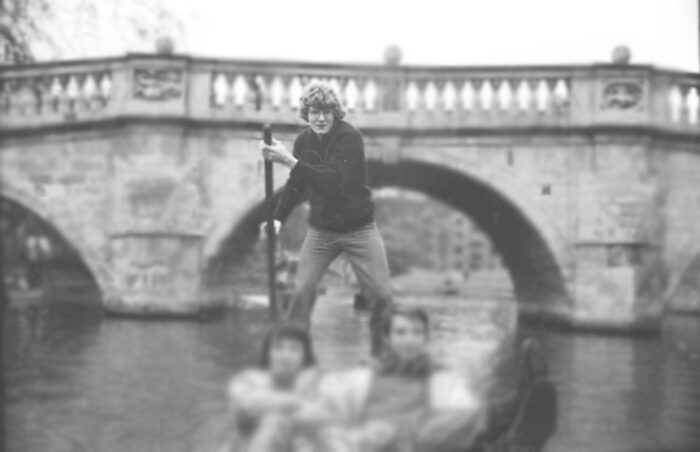
The beginnings of all this, however, lie in Cambridge. It was in 1973 that I came up to Cambridge, or rather descended from the foothills of the Pennines to the flatlands of East Anglia, with ambitions of studying geology, mineralogy and petrology. Trinity Hall appealed in part because its Master at the time, Bill Deer, was a famous mineralogist. Sadly, I discovered quickly that Masters who are also retired University Vice‑Chancellors and Heads of Department don’t actually teach undergraduates.
The Cambridge Natural Sciences course, with its four subjects and relatively hands‑off structure, turned out to be ideal training. I studied everything from organismal biology to crystallography and metallurgy, and, perhaps foolishly, skipped geology in my first year, having already taken it to A level. The result was a broad, problem‑solving mindset that proved invaluable later, when working across the many sub‑disciplines geology demands.
There were, of course, valuable student diversions. I joined the Boat Club in my first year to cox the 3rd VIII and learned rapid decision‑making in complex and evolving situations, skills that later translated rather well to field geology. I made lifelong friends and ultimately earned a rudder for the fastest 2nd boat in the Fairbairn.
Second year included modules on earth materials with Nick Rock and plant biology with the equally splendidly named Clive Greenleaf (1971). During the long vacation that followed, I went off to Ireland to independently map what turned out to be more bog than rock. Fieldwork is crucial in any geologist’s training and Cambridge has continued to play a role throughout my career, not least through connections such as CASP (the Cambridge Arctic Shelf Programme), which enabled me to venture into the Arctic.
To receive the Polar Medal for work that began with a student fascination for rocks, landscapes and deep time is a privilege. Geology and a Trinity Hall education have taken that fascination to many places, sometimes quite literally to the ends of the Earth.
About Professor John Marshall
Professor John Marshall is a geologist at the University of Southampton. He is the Chair of the Board of Trustees at the Cambridge Arctic Shelf Programme and an expert in the End Devonian mass extinction, with over 30 years of fieldwork experience working in remote base camps across the globe.
Professor John Marshall’s most recent publications include anatomical studies of previously undescribed marine and land species, and identification of the earliest known seed plant. His current research explores the origins of tetrapod’s.
In January 2026, Professor John Marshall was awarded a Polar Medal in the New Year Honours List recognising his outstanding achievements to polar research.