How can algae produce electricity?
Posted:
18 Feb 2026
This is just one of the questions the Zhang Group at the University of Cambridge is hoping to answer.
Last summer, I had the incredible opportunity to work in the Zhang Group laboratory, a group dedicated to researching how microorganisms make, transform and use energy, as part of Trinity Hall’s Undergraduate Summer Research Projects programme, supervised by Fellow Dr Joshua Lawrence.
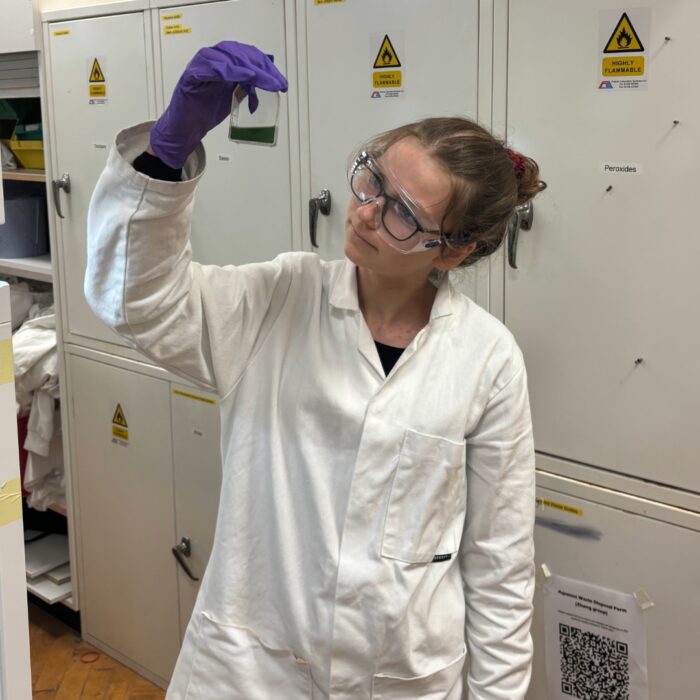
Dr Joshua Lawrence’s project interested me as it aimed to help the production of devices that could harness the photosynthetic machinery of cyanobacteria, more commonly known as blue-green algae, to produce a sustainable source of electricity. Unlike traditional solar panels that rely on mining heavy metals, these devices would use fewer – or ideally no – heavy metals, making them a great alternative for generating electricity.
But in terms of the science of using bacteria to produce electricity, where do we begin?
Cyanobacteria (blue-green algae) are capable of photosynthesis, which means they can transform sunlight into energy. During this process some electrons are naturally excreted, and using an electrode, we can use this to produce an electric current. The current can then be increased or manipulated by the addition of mediators, which are chemicals that can carry the electrons from the bacteria and transfer them to the electrode directly, acting almost like a shuttle. Our choice of mediator for this project was 2,6-Dichloro-1,4-benzoquinone (DCBQ), which is a disinfection byproduct and a well-studied mediator that has a similar structure to a natural electron shuttle in plants. However, the downsides to DCBQ are that it degrades very quickly in water as it reacts with hydroxide (OH-) ions, and it is toxic to cyanobacteria at high concentrations. Therefore, I was tasked with addressing these problems so that DCBQ could help us with our devices.
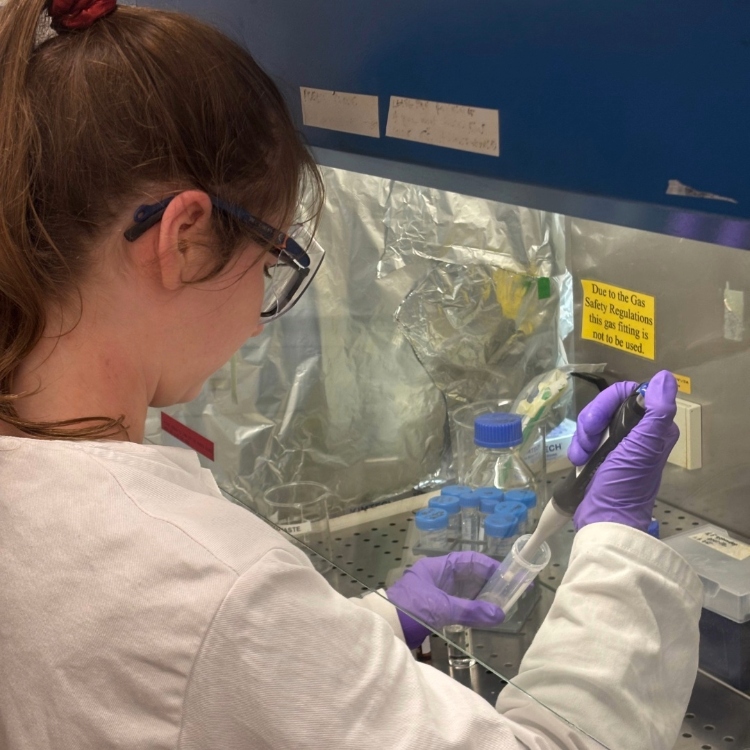
One way to address the degradation of DCBQ was to lower the pH of the solution that the DCBQ and cells are in, which was largely made up of water with a pH of 7. As cyanobacteria photosynthesize, they consume CO₂, causing the pH to rise. We needed a way to keep the solution at its starting pH during this process. One way to do this was using buffers, which make a solution more resistant to changes in pH.
I tried various organic buffers and separately monitored cell growth and DCBQ degradation to select the best one for the job. I also investigated changing other parts of the solution, such as metal ion content, which had little effect on DCBQ degradation. In the end, we identified a buffer that maintained a pH of 7 without reacting with the DCBQ or overly disrupting cell growth.
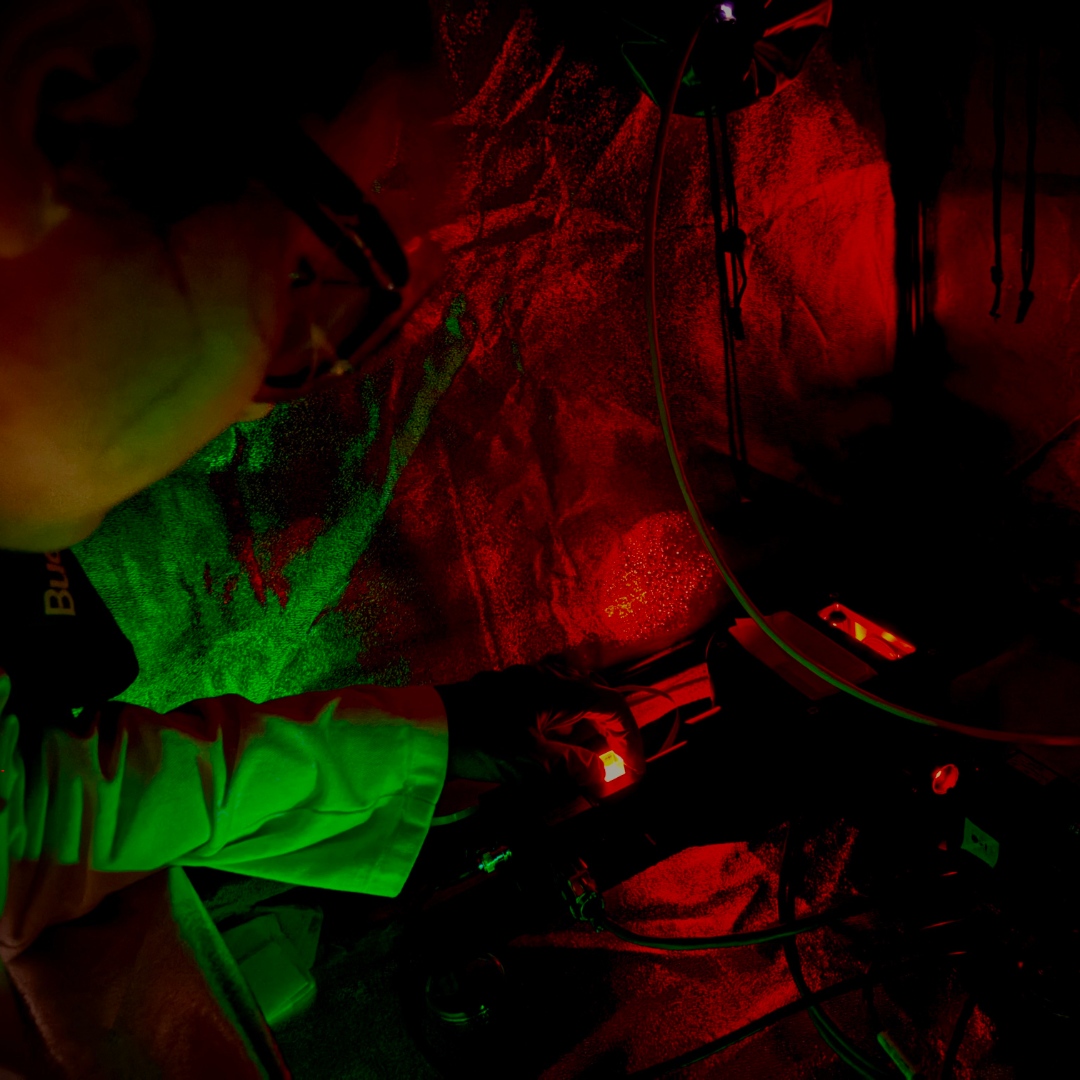
In the second half of the internship, I aimed to assess the toxicity of various mediators, using a fluorescent dye that could only enter dead cells. The dye gave a signal only when bound to DNA in these dead cells to let us know at what concentration the mediators became toxic. We ran into a few problems; for example, with DCBQ, there was no signal from the fluorescent dye even when we killed the cells with heat. This was because DCBQ absorbed light of the same wavelength as the dye’s excitation and emission spectra, quenching the signal entirely. Therefore, an extra washing step was needed before adding the dye. The results from this part of the project were still inconclusive and left room for further experimentation.
By the end of the project, I was able to work largely independently, with the freedom to try new experiments myself. I loved having the opportunity to take the experiment design into my own hands, as this wasn’t something I’d had much experience with before. It was also great to experience being part of a real lab, as my personal hope for the project was to gain insight into what a career in research would be like and whether a PhD would be my next step after my studies. Throughout the weeks, I was introduced to the work that everyone else was doing in the lab, from biologists studying the cyanobacteria itself to material scientists working on the best electrode shape for the job. This created a relaxed atmosphere, where everyone could ask questions and give advice on each other’s projects.
After finishing the lab work, I produced a report to practice my scientific writing and figure-making. It was satisfying to look back on what we had achieved, as well as many unanswered questions and failures, which were all part of the experience! I am very grateful to Trinity Hall for the funding which enabled me to take on this project.
The Undergraduate Summer Research Projects were made possible thanks to our generous donor, alumnus Iain Drayton (1991). Previous years projects have included research in a variety of topics, from bioinformatics and sustainability to international fiction and history.
To find out more information, head to the intranet.